
Ultimately, when we get up to the top, we will need to build FORM and STRUCTURE. But before we do that, understanding the mechanism that drives culture and its intersection with Faith is paramount. For that we’ll dig deeper to build more categories of thought. Don’t be scared of “philosophy” — the love of wisdom begins by putting right ideas into the categories. Without them, our ceiling of understanding reality is very low. Here we will entertain 7-8 -9 categories in which we can place most ideas, questions, discussions etc…..

Across the centuries, Human Beings from every tribe pondered and tried to answer the same questions. That makes these perennial questions classic:
1. What is the Nature of God/god/gods? or.. THEOLOGY
The First Cause? A Great Spirit? Multiple Deities, Kind of like human? Kind of like animal? or a hybrid of both? Exactly what is this ‘thing’ like? Is it ‘kindly’ toward humans? Does it have humor, personality? a mind? temperamental or dependable, aloof, evil or good? Throughout The Great Conversation, we will encounter many ideas about the nature of the god/God/gods, and any discussion about it, belongs in the box marked THEOLOGY.
Enough said for now, we’ll move to #2
2. What is ultimately true? What is prime reality? METAPHYSICS
The prefix ‘meta’ means beyond. Metaphysics translates… beyond the physical and natural world. The question has persisted for eons of ages: What is really true beyond the physical world?. Generally, metaphysics is used to discuss abstract ideas like theology and philosophy, a first cause, the nature of love, emotions, numbers, or soft sciences like sociology and psychology. But really, meta-physics is the study of all that is ‘really true’ both in the natural and the world beyond.
A bit confused? Pay no mind for now. We can come back to it later. Just know… there is a philosophical category called ‘metaphysics.’
3 . What is the nature of the Cosmos? COSMOLOGY
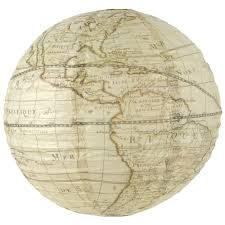
How did the universe begin? When did it come into being? Is it organized or chaotic, predictable or random, what is its purpose? Is there a designer, if so, who designed it? Is its structure dynamic or static? Is it a closed universe– simply processes of cause and effect? Is there a ‘spirit’ at work within the pull of various forces. Does it stand autonomous from human beings?
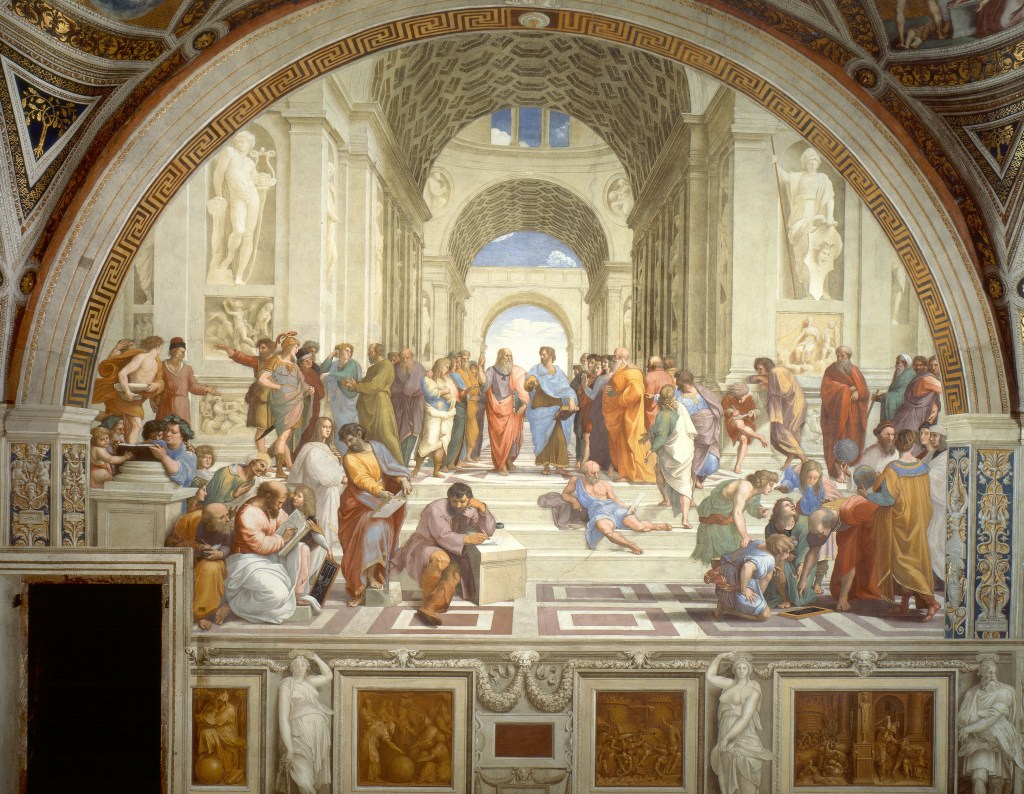
Might you be able to identify which group of men were concerned with cosmology in Raphael’s School of Athens?
4. What is the nature of Human Beings? ANTHROPOLOGY
What does it mean to be human? All conversations, discussions, statements and questions examining the nature of Human Beings we’ll put in the category of anthropology.
I predict in earlier ages human beings would never have been so confused as our day in what it means to be man or woman. To choose a gender? Unthinkable.
As we get into the conversation, we must look to find out,– was the human race ever this confused? We may be surprised to what we discover. But there is more to being human than race, gender, ethnicity, and all the other -isms with which we are being bombarded and assaulted.
Much, much more. Are humans naked apes? A cog within a machine with little free will, a dwarfed and fallen god? or a recycled soul from a previous human being or animal?
5. From where do we get ethics and morals? AXIOLOGY Who says what is ultimately right or wrong? Are morals objectively true? Are Ethics transcendent? Do they have universal consequences? What is the first principle in making any decision on this? Why can’t the Golden Rule be enough?
The 21st century human being is not the first to ask these questions.
6. How can we really know what we know to be true? EPISTEMOLOGY
Can we trust our 5 senses? Is our experience valid? Can we rely on human instinct or the weather, or a horoscope? Do we need an outside transcendent reference point or can we be guided by intuition, dreams, or empirical evidence alone? How can we really know that what we think we know is actually the way it is?
A biblical example in epistemology can be found in I John 1 : 1. John is speaking about how we can know for sure. HE is certain of his knowledge because of his 5 senses: “That which was from the beginning…. which we have heard, which we have seen with our eyes, what we have looked upon and touched with our hands–It is with ’empirical evidence’, these eye witnesses KNOW it to be true because of their 5 senses. This verse is an epistemological statement.
Across the centuries, empirical evidence is one among a number of first bases from which to build a foundation of knowledge — epistemology.
7. What happens after death? IMMORTALITY OF THE SOUL Did you know Socrates, Plato and Aristotle pondered the question and wrote extensively on the question….” what happens after death?” The discussion is ancient.
What is the nature of the soul? And what happens to it after death? Is there an afterlife? Immortal or mortal? Is it a shadowy existence? a reincarnation from something else? transformation from a higher state? Does it reside in Hades, the under-earth, the heavens, etc?
These 3 thinkers never had the opportunity to read Hebrews 9: 27 which informs us differently than the sacred texts of pantheism. The Bible has a different set of answers on this category of thought.
8. From where do we get purpose and meaning in life? TELEOLOGY
What is the purpose of history? Where or what is life moving toward? What is the destiny of human beings? Do meaning and purpose objectively exist, or do humans manufacture it independently ? Can we build a utopia? a paradise on earth? How do humans interpret the signficance of events that have/will occur?
Perhaps there are more, but for now we can start with what we have.
oh… yes..there is another one–
9. What is the Nature /Essence of Being? ONTOLOGY
What constitutes ‘being’? What makes up your being differently than other ( animal) beings? This feels hugely philosophical, but this question on personal identity and essence is critical too. Being or Doing? What happens when we “Do” before we “Be”? This category of thought is a part of metaphysics as it concerns itself with the nature of that is ultimate reality.
Our goal is to navigate the OCEAN of thought by putting the right ideas into the right categories.
Western civilization, American culture, actually, people across the Globe needs the Church to step up and begin to teach and disciple the rising generation within the biblical answers to the philosophical questions. A biblical orthopraxy is quite important; and operating from a full and true understanding of the the ten, or so, doctrinal categories are important, (Soteriology, Christology, Ecclesialogy, Angelology, Bibliology, etc) but these are ‘in-house‘ concerns.
Our endeavor here, rebuilding True education, is concerned with the Intersection of Faith and Culture.
And whether we work ‘in’house’ or at the intersection of belief and unbelief, we are after a deeper discipleship for the Church and an ability to navigate in all arenas of theological, doctrinal and philosophical thought.
Don’t be overwhelmed. Different than the other 5-7 worldviews, there are biblical answers to all these philosophical questions, and on these Truth claims, the Church must be clear and certain in an age of UNCERTAINTY, total confusion and chaos.
Stay tuned: Next post we’ll answer those questions by using a quiz. Stay with me.
Assignment:
Randomly pick any 4-6 chapters in the Bible, 2-3 from the Old and New Testament. ( or the Koran, or your favorite talk show host)
Which philosophical category is the text or talking point addressing?
e.g. The verse, “ I AM that I AM” (Ex. 3: 13 ) is making an ontological claim on the nature of ‘BEING” and in this case, the Being of God. Can you find Scripture that addresses each category of philosophy listed here?
Go ahead. Learn to see the Scriptures through philosophical lens. That shouldn’t diminish the relational nature of the Faith. Perhaps we should do a Sunday School Lesson here? a Sermon series? Change the way we do Christian Education ? Perhaps more substantial and challenging messages on our Church Marquees?
We simply can’t say the Bible is against or isn’t concerned with philosophy. Placing different kinds of knowledge into different categories is inherent within the biblical text and understanding this is a first principle in taking responsibility for knowledge.

I dare say, this is the education we never got. In older ages, the Grammar School and University understood Theology as QUEEN of sciences and Philosophy as her Handmaiden to be the interlocking gears at work bringing UNITY to the diversity of all the categories of knowledge. This is critical in understanding how to engage effectively with people around the Globe and to restore True Education in any part of the world. Education was much simpler when the authority of Christian Scriptures prevailed in the public square, but no longer; multiple worldviews complicate things.

But we need to stay here in the deeper waters for yet another post. There are different components to understanding how the interlocking gear shift cranks. We are concerned in understanding the way components of Christian theism have interacted with 2,000 years of western culture.
Next post: Knowing and Owning our Starting Points. Do we know them?
For an interest in sorting through the same philosophical interactions with the texts from the Eastern Canon– well— that makes for a fascinating conversation but will need to wait for a later discourse.
 The Great Conversation taken Captive