I consider myself an exiled student of the Humanities. After teaching High School English in public education for 10 years, this is what I learned:
1. There are many significant Primary texts of Antiquity to which we were never exposed in public education.
2. Up until the modern age, the Bible was/is a significant thread running through the entire western canon. Failing to recognize its role within the writers or as a lens by which we read everything else is like taking the mind and the spinal cord out of a human body. It falls limp, loses its meaning and functionality.
3. It is the Christian Faith that has bequeathed to us the Intellectual Tradition of the West.
4. We largely remain oblivious to it, and a Church with no mind about it — is unable to lead.
5. In many ways, we are like the meandering stream at the bottom of the valley with a view from no where.
In addition to catapulting the silent revolution of Classical education into the mainstream, the purpose here is to provide a venue in which I can/process and interact with The Great Conversation across the centuries, and to hold ideas accountable to the biblical account of LOGOS– the person of Christ. Connecting the dots— from author to author down the corridor of time– provides critical context in understanding the cultural milieu in which we live. In doing so, we are enabled to climb the summit and LEAD the culture.
EVERYONE is welcome to listen in. Thoughtful comments and respectful questions which challenge the conversation toward the True, the Good, and the Beautiful are not only appropriate, they are desired.
Do your reading, your thinking, join the Great Conversation and get a taste of the education we never received!
BUT FIRST — come the Prerequisites. ~~~~~~~~~~~~~~~~~~~~~~~~~~~~~~~~~~
The PROLOGUE is built for beginners in worldview /classical thought– or for those who’ve never been part of a college Humanities class. To get myself and you on the same page, working through the first 5 POSTS may prove to be helpful.
Understanding the Crisis
Getting into the Big Leagues
Knowing our Starting Points
Biblical Theism: The Foundational View
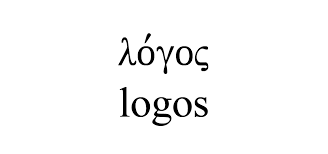
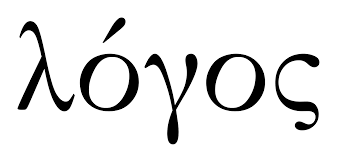
A Pre-Test on the LOGOS
NOTE: The site will, hopefully, develop as time moves on. Branching into several directions, ie. Books and Chapters may occur. Bear with me as I figure out how to use this medium.
I loved it even though it was… shall we say… ? extreme in some rules. I began to understand not only the Benedictine Monastery, but the roots of all of other ‘separatist’ groups as well. The Order of St. Augustine, the Cappadocian Desert Fathers: Basil and Gregory of Nissa, the Dominicans, the Franciscans, The Carmelites, the Jesuits, Anabaptist groups: Mennonite, Amish and Hutterites, the Bruderhof, and…. well many others . Though-out Church History, many groups who truly attempt to leave the world behind in order to follow Jesus share commonalities: voluntary membership to The Rule, obedience to leadership and accountability to the community of faith, in which members allow a transcendent structure to manage their time, possessions and money.
The Beauty of the Rule of St. Benedict, however, is that is quite… truly Christian and biblical, more than Catholic with a capital C. While other orders may be more extremely ascetic— in its complete denial of any creature comforts, the Benedictine order revolves around 3 Disciplines: Prayer, Study and Work which really are the rule for every Christian. Most of the 73 Rules are generated from specific Scriptures in order to structure time, the work of God, the worship and prayer, study and work. The final rule, St Benedict writes, “The Reason we have this rule is that by observing it in monasteries, we can show that we have acquired some degree of virtue and the beginnings of a monastic — a perfected –life”. BE Ye Perfect even as your Father in Heaven is perfect.”
What is in it for us today? a Model for Classical Education.
It is important to note that western civilization grew out of the monastic life from which disciplined believers developed schools. Today the same Rule can be used as a model for re- building families, schools and strengthening churches.
I recommend the Rule of St. Benedict as a great beginning in the conversation on how to train up children and and the community of faith.
In Books 5-7, in Plato’s Republic, we find 3 metaphors that pretty much sums up the Greek ( Socrates and Plato ) educational philosophy on how to educate the rising generation. They knew— we can’t educate until we properly think through the nature of all reality. My 2 summations don’t give due justice to the complexities of their philosophy; that can be found all over YOU TUBE. I believe, these key notions are significant.
WHY it matters:Public education is in complete collapse– unable to educate. Modern education misses the mark on these very key notions. We are living in the wake, or in the effect of these 3 prevailing philosophies: Existentialism –— the notion where the soul is regarded as a non- entity: a shadowy substance that is unknowable, unreliable and unusable. It is up to each student to fill the empty self. Behaviorism: Because the core of the inner person has been disregarded, beliefs and motives/intentions, are untrustworthy. The will and reason are divorced from beliefs and motives thus, we focus on behaviors. Since the human personality is fractured and unable to function as a whole person, teachers become Behaviorists— we learn to manage behaviors of a very fractured self simply because modern education fails to recognize human nature. Utilitarian: Education has been dumbed down; reduced to the final product: Study so you can pass the test, get good grades, get into a good college to make a lot of $$ and to live the all- American dream. After all we need to support public education, so our schools can still get the necessary funding.Pass the Test. PASS the Test!. PASS THE TEST!!!
Plato would not recognize what we have become. And these metaphors give us a glimpse of the philosophical “GLOVE” the Greeks created before the arrival of the true form of the HAND of the LOGOS.
2 images: The Sun and The Cave give us an idea on how the pre-Christian Greek World stacked up the major concepts in the “meta-physical” world.
The Sun: Plato saw ” the sun” not as part of the ‘essence of THE GOOD, rather as a child of the Good. Because the ‘real world of GOODNESS is beyond us, LIGHT is needed to illuminate the Form of the Good which is the greatest GOOD. While the masses think the greatest good is pleasure, and the dignified folk believe the greatest good is knowledge, through the sun, we can come to know… the Good. The GOOD is intelligible and knowable, the highest and the best of Knowledge and the Sun gives us sight.
The Cave: Humans are prisoners within a dark cave that don’t understand who he is or the nature of the world around him. A fire lights up the way as one prisoner is led out into the light where he sees who he is and the world around him. The journey out of the cave into true reality is the journey of the soul who discovers himself. Education is less about the accumulation of knowledge than discovering the journey of the soul toward the truth about the the true self and the world around him.
Classical education then, returns back to educating the whole person which includes nurturing the soul and attending to the sin nature….
So, we are off … and I thank you for joining me. Here is a focal question for this week.
In our attempt to reconstruct the Good, the True and the Beautiful. Which is primary? or Ultimate ? Does it matter?
Our Crisis : Not all, but many young people are literally falling apart and unable to function. Occasionally I’ve met young people who walk around as ‘thugs /barbarians’-( immediately assigned to special education) when I sense an inability to find their ‘being’ in any discipline of knowledge/ scientia. As a front seat witness to hundreds of young lives, it seems true that part of what it means to be human is a primary need for unity/oneness/ wholeness. ( which Jesus confirms in John 17) Our separated disciplines of knowledge doesn’t fill the need.
Our task in true education, then is to restore the universals/ transcendentals. But what are they?
I found Plato to be brilliant. I was fascinated with his [pre-christian] understanding of ultimate concerns or ultimate reality. .. . for it felt so ‘comprehensive’. Through his discussion, we see his search includes the ‘whole picture’ in searching for oneness: pursuit of the true, the good, the beautiful … at times virtue and justice. He perceives a world that was brimming full of divininty; AND– that human beings can thrive only by living in harmony with the cosmos and the gods. But he doesn’t stop there.
For Plato: understanding higher concerns must by extension be carried out into the classroom/ academy, and by extension, into the community. He perceived a city-state run by a philosopher/king that understood that ‘knowledge’ alone was fractured and insufficient. Humanity must be drawn up into a higher order of things. Fascinating. He understoood a “meta-physical” reality.
The paradigm for Classical education then, is something totally different; it is not concerned merely with a skill set to find a job or created a career. It is the enterprise of sculpting a young person around a higher order of things– like attributes and rationality.
By contrast, we today live within a post- Christian culture where disciplines of knowledge have been divorced both from philosophical categories and from the fulcrum of the Logos– which destroys any possibility for rationality. To restore the framework: we will need to place academic disciplines back into appropriate philosophical categories, and those categories must be re-attached to the fulcrum.
Classical Christian education then, is attaching philosophical categories not to rationality but — BEING… the Logos. ( but that comes a bit later with Aquinas.)
As you reflect on the confusion of our post-modern culture around us, which seems to be most naturally operative within people : the pursuit of the true or the good?
To answer this question : This week I will be reading Plato The Republic Book 5-7
Join me ! If you have time or care to… which most likely will not be many of you. .since I know… you are BUSY!!
We have the mandate; so why do we hate it so much?
Well, the enterprise can be tricky, and quite frankly, it can be mind-boggling. But we will be amazed how quickly the overwhelming task becomes much easier– simply by learning definitions to a few key words, recognizing names of people, separating and system-izing ideas into separate categories. What a difference that makes! And we find out, we don’t have to know and do it all.
Actually we are after habits of the mind and a basic orientation in how to part the ideological waters. If we say we care about Truth with a capital T, we don’t really have a choice. We choose whether to give our teenage minds the tools with which to do this kind of work.
We really have no choice.
Colossians 2: 8 “See to it that no one takes you captive through hollow and empty philosophy…”
II Corinthians 10:5 ….” and we take captive every thought to make it obedient to Christ”
So we move ahead with —the Great Books in one hand and, …..the Bible in the other.
But wait still…. one more… yes… another foundational orientation before we really get into The Great Conversation:
We must understand our endeavor by: knowing that the nature of Ideology— Ideas Have a LIFE:
they have an origin ( within time and place)
they have influence,
they have adherents, and they have detractors,
they take on a good or bad, right or wrong nature,
they have consequences, or they can bear fruit.
they have a lifespan
Good ideas will last eternally, others will die.
And ultimately– we’ll be led to believe– many ideas began in the Mind of God. But which ones?
This is the business at hand; we’ll be examining the development of ideas as they have developed on planet earth down through the corridor of time. We will try to find, “whose idea is it? When did this come up? Who is living within that ideological camp? etc.
Ecclesiastes tells us ‘there is nothing new under the sun’. As we walk along, we’ll discover that most ideas have already been thought up; we just have younger and newer people coming along to discover them.
But I am curious: Have Human beings– in any era– ever attempted to change genders? and insist that men can become women and have babies? I would surmise.. now.. that one is a totally NEW concept… but then again… we might be surprised.
We are getting closer and will soon move into the enterprise of The Great Conversation of the Ages starting the week of January 20.. with Aristotle and his Nicomachean Ethics. Stay Tuned! We are after …..
A Well-Trained Mind through the Silent Revolution of Classical Christian Education.
Consider the veracity of the following quote:
“Small people talk about people; great people discuss the world of ideas.”
Who said this? When? Can we surmise it must have been someone living with in the secularized Modern Era?
Actually, it can’t be true.
The universal questions in life are still the same old, same old questions.
The biblical answers are still the same old best answers to those questions.
The primary texts in which authors have deposited and bred ideas haven’t changed. People still read the same old, same old books: Plato, Plutarch, Justin Martyr, Augustine, Aquinas, Descarte and many others. And to date, other than Jefferson tearing out portions of the Bible, I’m not aware of teachers who literally attempt to change the texts. They ignore and mis-interpret texts, but rewrite them? I’m unaware.
And the eras of time haven’t changed. In the very PC world of the western academy, primary texts of western thought–are still broken up into the same old historical time frames —roughly and with some variances —here we go… into more categories:
a) the Hebrews and their Covenant, 3000 BC to 300 BC
b) The Greeks 800 B.C. – 300 BC
c) The Romans 300 B-C – 400 AD
d) The Church Age Christ – 100 AD
e) The Patristics 200-450 AD
f) The Anglo-Saxons 500-750 AD
g) The Medievals 800-1274 AD
h ) the Renaissance 1300-1495
i) The Reformation 1517- 1650
j) The Age of Reason 1650-1750
k) The Romantic Age 1800- 1840 AD
l) The Modern Age Descarte –1375 to present
m) Post-Modernity 1960- present
What has changed is the way people think about the questions, the answers and the texts. Why raise the questions when we know there are no answers?
The texts are no longer read through the ‘glasses’ of objective categories of ultimate Truth, Goodness and Beauty, but rather through lens of polarities and inequalities of gender, ethnicity, sex, social mores, and the inequalities of social class and oppression of the dominance of privilege. Somewhere along the way, folks attempted to discard the ‘image of Christ’ by changing the B. C. — into ‘before the Common Era” and the A.D into— ‘After the Common Era” ‘ even though the person of Christ divides the millennia. And since ” Truth can not be known or discovered”, the Bible has lost its unifying power and authority.
WHY are we doing this?
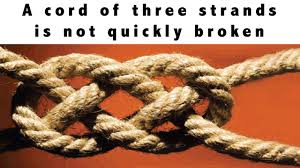
Because learning to Braid these 3-4 strands of constants into a triple -stranded cord is the necessary lifeline to pull a sinking ship of education to shore and repair the ruins. The subsequent effects: We will RESCUE LIVES not the whales! Throw a lifeline to Suffocating Children! The Work will Save the Humanities! Stymie the pendulum swing! Establish the Faith of our Children! It will provide necessary context for the floundering millennials and everyone born since then…. along with the all the rest of us.
The Goldfish need a Goldfish bowl; they can’t swim in water on a table! And they do not thrive; they are unable to flourish in a raging ocean where they cannot part the waters.
Learning to think “ Classically and Biblically” is the work for our time. It is hard work; yet I have witnessed it. When given the tools, High School minds are very capable of Taking The Great Conversation Captive.
I submit they are bored, intellectually assaulted and insulted when not given the tools to fight for the Truth. I quote Dennis Prager who says.. “ They ( high school and college students ) are being given…..Dribble “.
It’s true; I concur.
Here we are going for the highest of summits. There is no greater conversation that can be had.
To this I will add, much of Christian education created within the modern era in our Christian high schools and Colleges have not yet made the paradigm shift. And the formation of the Child, the skill-sets, the grades are suffering horribly.
As I write, I hear Chuck Colson making these same comments some 15 years ago on Breakpoint radio. These are not new, but I hear them afresh today.
Why does it matter?
Perhaps more now than then. Today, the deteriorating cultural currents are deeper and wider and more swift. We can feel it; the falling away is going on around us as the beliefs and values that once held up institutions and organizations are dissipating. We do not live in a cultural vacuum. Just picture the Mississippi River becoming wider, deeper and more swift. And because our children and grandchildren will be caught in some cultural milieu, passing on the Faith is at stake.
A few comments on the nature of culture:
Cult-ure defined literally means:– the beliefs of a cult.
Culture is like a river going somewhere… mostly downstream. Sometimes it is contained in stagnant waters, other times in oceans of the dominant mainstream and other times in a mighty rushing river. Our beliefs and values can change; they move one step away from what the previous generation held; they are in revolt, or in reaction, or simply stay the same– completely unchallenged. In which current are you?
People often flow concurrently with culture –by osmosis or unawareness we get pulled into thinking, believing and doing like others around us. We conform.
Decisions today; effects tomorrow. We live within the wake of decisions and beliefs made in previous years/eras. Our decisions today show up most– later.
Culture breaks down on at least 2-3 ways:
People hold beliefs that aren’t true. Or partially true.
People hold beliefs– yet do not live out of those beliefs. An orthopraxy of integrity doesn’t follow.
People live with inferior values that do not ascribe to the more excellent way.
This happens both places:
a.) Within the Church b.) Outside any faith community.
It’s easy to blame everyone else: the government, politicians, the schools, an anemic Church, Church leadership, the media, but most likely, it befalls on most of us from not living out of a full understanding of all that we say we believe. The motive here is not to place blame, rather to encourage all to step up and assume more responsibility in our own neglected niches.
For example: For years, I taught English– The Art of Language– without anchoring ideas to the transcendent, the eternal and the universal. I was bothered in both heart and mind, yet I operated out of my training in order to hold a job. My orthopraxy did not match what I said I believed.
I accommodated the breakdown within the Humanities Departments all across the western world.
And in a broader way: a secular education is being funded by our tax dollars. For decades and up onto the present moment, people of faith have and still are accommodating and funding secular public education.
The devastation on the human development and personality? It is tragic. We’ve only begun to see. Real people and real young lives are at stake. Even as we speak, we are funding — the breakdown of culture.
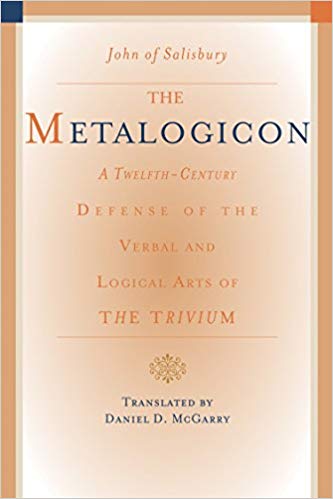
The Metalogican on behalf of the Logos–Truth and Logic
gram-mar: the science of thinking, speaking and writing correctly
First Art for the youngest of children
The right ordering of words, symbols and meaning
The First Art for acquiring wisdom
The right ordering of virtues
The First Nurse of the Letters [ aka Literature]
The Mother/Arbiter of all Speech with precision, wisdom, and eloquence
The Servant of every other academic discipline
The Guide to every step toward Philosophy
The Cradle which fosters and protects Philosophy
The Index of Civilization
The Distinction between Barbarianism and Civilization
Supporter of the Courts, the Cathedral, and all Institutions of a civilization.
There it is.
I get it! This explains why:
Although he never studied at the
University of Oxford, by the end of Grammar School, William Shakespeare’s innate
ability was furnished to become the world’s greatest wordsmith with a prolific
command over words, language, logic, history, philosophy and theology at age
15-16.
As we witness the tragic unraveling of
a western civilization stripped of its Logos, what is less obvious yet
as consequential is the void left by the schooling in Grammar we [the
Church] never had. The hollowed
out core (Truth and Logic) of the modern age powerfully shapes our diminished notion
that grammar
is little more than crossing T’s and dotting I’s;
When, in fact, the medieval Grammar
School, which held sway for centuries, entailed a worldview and an established
place in the community, and a skill set far more extensive and comprehensive
than ‘mere grammar’.
1. epistemology, 2. teleology, 3. anthropology, 4. theology, 5.cosmology, 6. ethics/axiology, 7. immortality of the soul.
And the missing category not on the quiz? Metaphysics/Ontology
HERE it is: The Missing Metaphysical Framework in Public Education
Sample of Biblical answers to The Universal Questions
Proposition 1 The Nature of God Theology
Infinite, personal, and Triune
Transcendent, eternal
Omniscient, Omnipotent and sovereign
Absolute standard of good
And more
Proposition 2 Nature of the UniverseCosmology
Created ex nihilo, complex, beautiful
Uniformity of cause and effect; orderly and with regularity – not random
Open system, not determined; people and events can decide freely
And more
Proposition 3 The Nature of Human Beings Anthropology
Created Imago Deo: dignity, personality, rationality , morality, self-transcendence, creativity, intelligibility and capacity for reason
Agent of Free Will
Created with innate natural and moral law
And more
Proposition 4 Nature of Knowledge Epistemology
Human beings are created with capacity and a desire to know, by a God who is all knowing and communicates with them– the all knowing
General revelation,– the open book of Nature, the natural revelation within
Special revelation: the person of Christ/Incarnation– the inner witness of the Holy Spirit.
The Logos: capacity to know logic, reason, intelligence, and meaning inherent in God
The Word: is the light of men ‘Understanding and wisdom’
And more.
Proposition 5 Immortality of the Soul
Physical body dies; soul lives forever
Death: gate to eternal life with god or eternal separation from God
Life is transformed and glorified in life eternal
Man is destined to die once and after that the judgment
and others
Proposition 6 Morality and EthicsAxiology ( study of values)
Ethics and morals are objective and transcendent
Moral revelation revealed through Decologue
10 commandments reveal sacred boundaries of protection and ownership
ultimate standard of good is rooted in the character of God and person of Christ
Proposition 7 Purpose and Meaning Teleology
time is linear- irreversible , unrepeatable, localized in time and space
meta-narrative with beginning, middle and end
turning point events: creation, fall, incarnation, resurrection, Pentecost, The Church Body Life, glorification
Sequence of events is the record of God moving in the affairs of men, revealing His purposes
Humans find their purpose for living in cooperation in bring God the glory.
Now that the Framework is sort of understood, we can use it 3 ways.
Establishing Faith: Christian Theism as a Framework for True Education.
The 8 categories of propositional truth can be used as pillars on top of the Foundation and Cornerstone of Christ. The unmovable, ageless, enduring pillars will provide the vertical space necessary for developing children to thrive.
Hats off to Doug Wilson who pioneered the work of The Association of Classical and Christian Education (ACCE)some 30 years ago He, along with other leaders and their organizations have been Rebuilding the Ruins in Classic education for 3 decades- Circe Institute, Highland Latin School, Christopher Perrin, Schole Academy and numerous others. Here we are not interested in re-inventing their wheel. We will piggy -back from them— A plethora of resources are available — — I note the START UP Kit from ACCE.
JUST THINK about it: We grew up with cognitive structures of the academic disciplines that were never attached to the framework. No wonder it is in collapse today.
A TRUE Classic education then: a) goes about the business of attaching the academic disciplines to the logic of the various components of the Framework– b) it works to integrating all the disciplines back into the whole, and 3) it works to position Christ as the center of all knowledge, who holds it all together.
2. Defending the Faith: Apologetics: All 8 propositions of Christian Theism can be as starting points in the work of Articulating and Defending Christianity where great work is being done by many apologists whose work can be found online.
3. As a LENS: for reading The Great Conversation. Now that we know the “grid-work”, we can examine all authors, speakers, communicators, even film makers in their treatment of ideas– with confidence as we walk along the precipice. Reading viewpoints from authors through out different historical period explains our present culture and starting points for discussion for those around us.
This is the work that will save theHumanities. Analyzing each component of biblical theism and it’s intersection with 7-9 laws of logic is the missing gearshift that needs to drive our institutions and academic disciplines. This is the missing backdrop that Francis Schaffer spoke of when he asked the question, “What stands behind it/everything?” If literary criticisms are sincerely pursuing TRUTH, it will take the next 3 millennia and filling dozens of new libraries to examine the coherence and unity of each authors position in all the different components of theology, metaphysics, cosmology, anthropology, epistemology and teleology, etc.
The crisis in Education is largely one withinTHE LIBERAL ARTS — The Humanities. For without this framework of Truth, the great conversation becomes a little more than a cat and mouse game. Why bother?
Here is a valuable insight. It is Christianity that allows for a liberal arts education. Because of the stability and endurance of Christian Theism, all other notions can be entertained. To entertain a notion does not mean we believe it. But it is with certainty we know that the unified and coherent composite of all 8 propositions of Christian theism can endure and stand on its own authority. It may be buried, be hidden from sight, misunderstood, but when it is brought out into open view and understood, it can stand up against all other ideas nor is it threatened by other worldviews. This idea of the ‘liberal arts’ has engendered freedom of thought, freedom of speech, freedom of religion, freedom of the press, etc in the West. Make no mistake; it is Christianity that has bequeathed us these liberties. On this, we must be convinced.
The “LOGOS revealed” is much more than “Jesus Loves Me this I Know”.
Here is where we are tripping. Assuming thatthe “Logos” is no more than “Immanuel, God is with us” , we attempt to balance The Faith on a one- legged stool.
The Church Fathers understood the LOGOS to be the fount of all knowledge. Hence the catholic church began schools; monastery schools turned into the Cathedral School which transitioned into The University of Oxford, Cambridge etc; And up until 20- 50 years ago, students across the world have flocked into the West and the US to get the best university education. Yet the framework, of Biblical Theism on which western education was built, has been removed from the entire enterprise long before we were born.
No, it isn’t only an experience with the Grace of God. The “Logos” is equally much ado about “Epistemology”. What is really true about all of reality? How does the entire body of knowledge make sense as a whole, who in Christ holds all things together? Colossians 1: 17
Hebrews 11: 36. For from Him, and through Him, and to Him are all things. To Him be Glory for ever.
We didn’t grow up with it; the Modern Church in the West doesn’t perceive how to rest on not 1, but 2, ( I think 3) legs of the stool.
Do we know the biblical starting points on which we build an entire cognitive scaffolding? We need to become very comfortable with this mechanism because it is strong enough to offer to the entire community.
Before we go further– TAKE THE QUIZ.
QUIZ: Here is a sample of biblical answers. Identify the philosophical category the answersreveal. (answers are on the next post). Here are the categories:
teleology, metaphysics, immortality of the soul, anthropology, epistemology, theology, cosmology, ontology, ethics/morality
..General revelation through the natural world around; special revelation through the Scriptures, the Decalogue and person of Christ _______________________
…history is linear, irreversible, localized in time and space; meta-narrative with a beginning, middle and end; sequence of events is the record of a divine Sovereign God moving in the affairs of men, revealing His purposes. ___________________
created ‘imago deo’, with dignity, personality, rationality, morality, creativity; agent of free-will; with innate moral and natural law. ___________________________
Infinite, personal, and Triune; transcendent, eternal, omniscient, omnipotent; absolute standard of good. __________________________________________
Create ex nihilo; out of nothing, complex, beautiful, uniformity of cause and effect; orderly- not random, undetermined ____________________________________
ethics and morals are objective and transcendent; 10 commandments reveal sacred boundaries for protection and ownership. _________________________
the physical body dies; soul lives forever, death is a gate to eternal life with God or complete separation from Him; destined to die once and after that the judgement. ________________________________________________________________
These answers are not exhaustive, there are more, but we will call this set of answers Biblical Theism–the biblical set of answer to the universal philosophical questions. And this set of answers are completely different than other worldviews. The complicating mechanisms are Deism, Naturalism, Pantheism, Islam, Existentialism, Nihilism, and others. The deeper we can understand the complicating gears that turn the cranks, the more effective we can become with people across the globe.
Let’s not be fooled. All starting points are of a religious nature. People believe things because we bank it up to someone/thing we trust. Across the globe, The Tripitaka informs the Buddhist, The Koran informs the Muslim, The Analects inform Confucius China, the Upanishads and The Vedas inform the Indian Hindu and Jainist, while the Torah informs the Jew and the Bible informs the Christian. For many Naturalists in the West, the science of mother earth, or the Book of Nature is the starting point.
Each of these sacred texts have different answers to the philosophical questions posted yesterday.
Extra Credit: Do you know the reason why Biblical Theism is the BEST metaphysical framework available today? Explain in a 5 page essay.
Hint: “Just because it’s true” is not the right answer.
Nor is ‘its all a walk of faith anyway.”
These comments reveal a deep seated ‘intellectual laziness’ from which we must turn away, for it keeps the Church immature, and not allowed ‘to grow up into the Head‘. The starting points of Biblical Theism are far more complex, intelligible, interlocking and interwoven, reasonable, and logical for such a simplistic answer.
At this point, I’m guessing some, or many, will begin to check out— because.. you don’t need to know it.
Why bother thinking through? I get it; you feel no need to dive this deep.
Here is my answer:
You may not feel the need to, but your children and grandchildren need you to teach them. A failure to develop the mind keeps the Church juvenile. We grow up into maturity when we put on the Mind of Christ who knows everything about everything.
Like a huge mega- picture puzzle, after we get the framework in place, every piece of all of reality fits together with interlocking precision. Getting the big picture erected and pushing it into the public square along side of the love of Christ is the new frontier of evangelism in the west.
LOVING our neighbors by providing education is meeting a basic need; it is rebuilding a foundational institution in society .
We need to keep on …. thinking; To Think or not to Think is hardly the question.
But lets go up for air; we need to get this out in the open so we can take a good look at it.
After all, Biblical Theism in Education has been buried for a long, long, long time.
To see it more clearly, check into next post– Biblical Theism: The Foundational View in the West










 The Great Conversation taken Captive